YUQI WANG
Reality and Dreamspace
A Film Directed and Performed by Yuqi Wang
Reality and Dreamspace, 00:03:46, 2022
4K Video | 1920*1080
Stereo (R L) | double track | 48 kHz
Image: Black and White
Country of Production: China Mainland, United Kingdom, France
Reality and Dreamspace examines the collapse of the distinction between perceptual reality and imagined interiority, proposing them as co-operating systems rather than antithetical domains. The film engages with the legacy of mid-century experimental cinema, particularly Maya Deren’s articulation of the time-image, in which meaning arises through interruptions, discontinuities and perceptual failures.
Rather than securing narrative or psychological coherence, the work constructs an unstable visual architecture in which figures appear as conceptual operators. A crawling creature, a faceless woman and a theatrical giant circulate across environments without fixed origin, functioning less as characters than as archetypal placeholders in a cognitive schema. Spatial disjunctions and false continuities prevent resolution and deny the viewer the comfort of causal logic.
The film situates spectatorship within a suspended field. It intimates a human drive toward ‘truth’, even when painful, yet troubles that aspiration by rendering truth indistinguishable from illusion. In doing so, the film reframes reality and dream as interchangeable modalities, each capable of generating conviction despite their constructedness.
Meaning, therefore, does not result from closure but from the viewer’s inability to decide which ontological register is operative. Reality and Dreamspace ultimately proposes that perception itself is contingent, and that the instability between worlds is not error but method: a space in which thinking is compelled to occur.

The film opens with a creature crawling out of a fountain shaped like a demon’s eye, a birth without an origin story. It drags itself into an unmarked desert as if summoned rather than choosing, moving not toward a destination but into existence itself. Its direction is unreadable. Perhaps this is the first lesson the work proposes: things begin before they know why, and motion arrives long before meaning.

The image shifts: a girl enters the frame, running from something we never see. Her pace quickens, as though pursued not by a body but by a thought that refuses to fall behind. A cut follows, and she is suddenly in a bedroom, waking with a cautious hesitation, as if the chase has crossed the threshold with her and whatever threatened her outdoors has learned how to inhabit rooms.
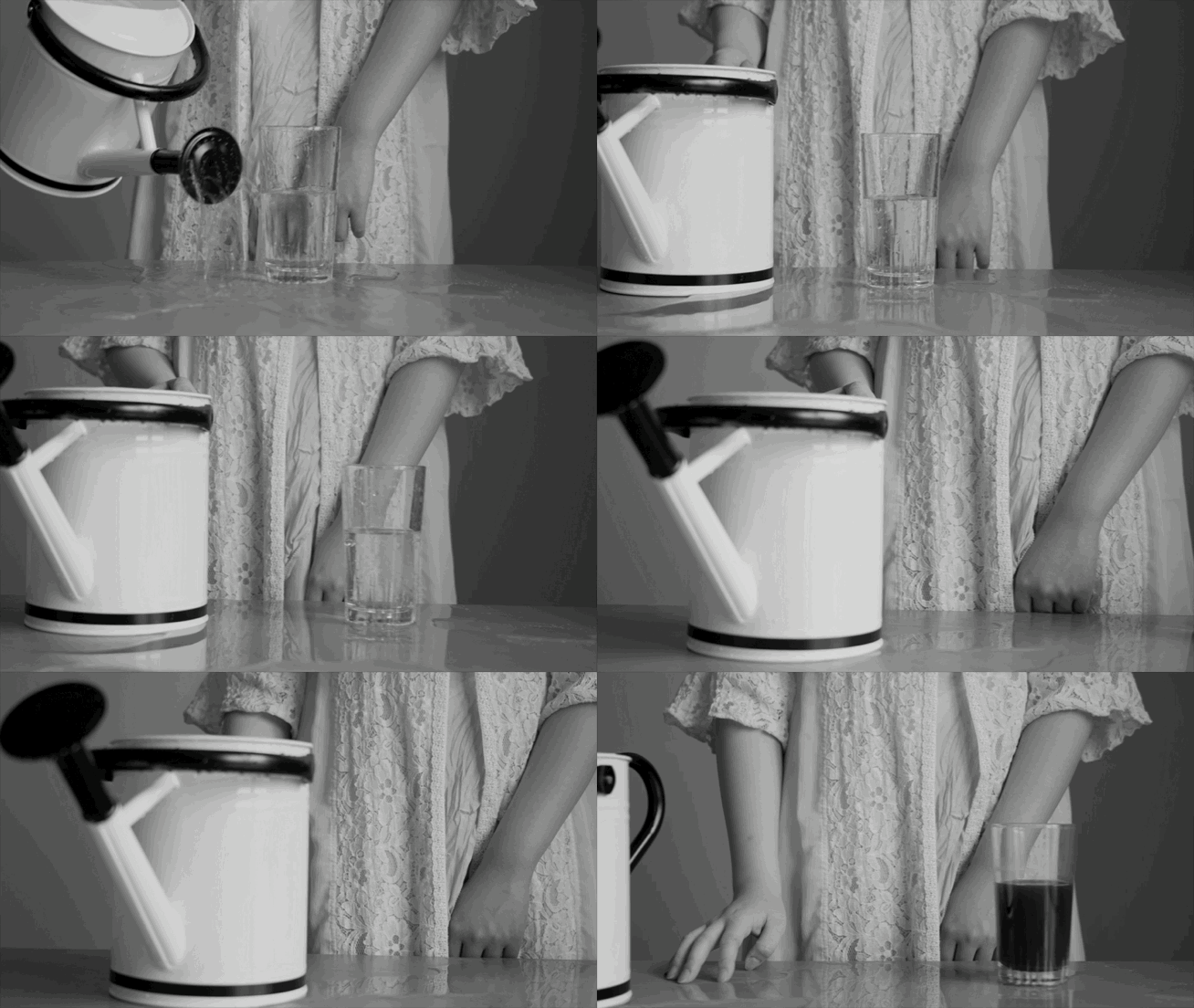
She moves unsteadily, reaching for a glass of water, only for it to become tea in the time it takes to blink. The transformation is casual, almost indifferent, as though the laws of matter have abandoned their need for explanation. Perhaps coherence is optional here. Maybe the reason she cannot see her own face is that it changes faster than recognition can hold it.

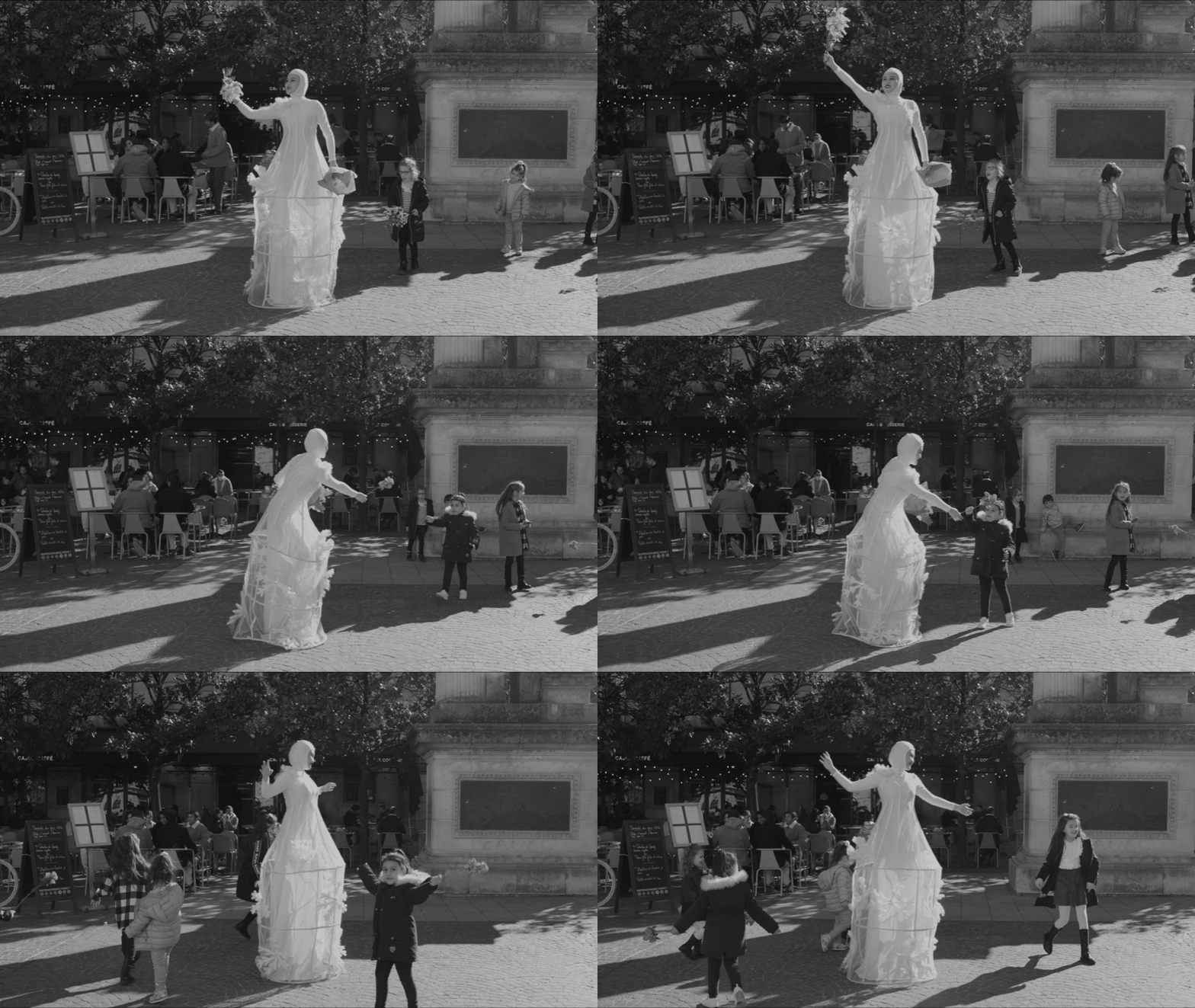
After she gazes out the window, the scene collapses into a deserted ruin.
The question returns, silent but insistent: Who is she?
A towering figure in theatrical costume now stands at the centre, drifting from place to place, less actor than apparition. She wanders as if testing the limits of being seen, turning visibility into illusion, and illusion into the only form of presence available to her.